
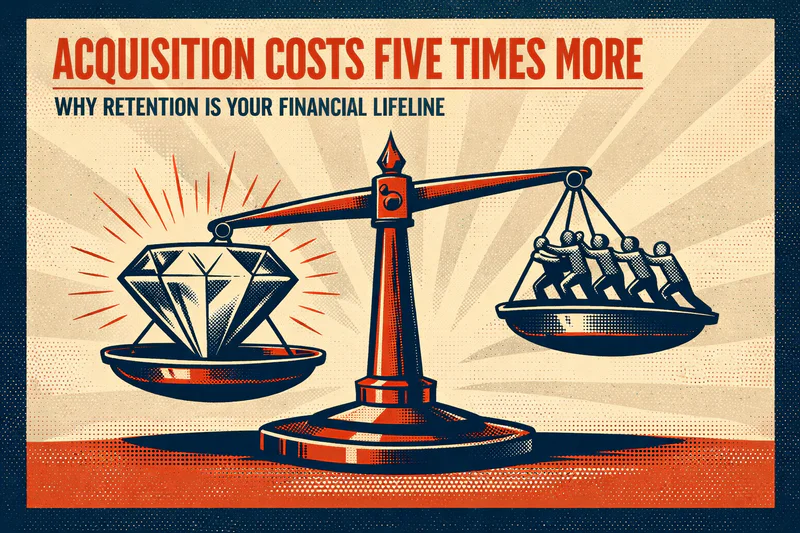
It costs up to five times more to acquire a new donor than to keep an existing one. Yet, the average charity bleeds out nearly half of its supporter base every single year. That is a massive, expensive leak in your funding pipeline! You cannot fix this hemorrhage by simply scheduling another generic newsletter. To truly stop the churn, you need an infrastructure that actively listens and responds to your supporters in real time.
We have moved far beyond the era of manual spreadsheets and delayed email blasts. The most effective donor retention strategiesnow rely on Agentic AI and seamless customer journey orchestration. By treating your supporters to a hyper-personalized, zero-lag experience, you build unshakeable loyalty.
Let’s break down exactly how you can implement these automated, context-aware workflows to protect your revenue, empower your team, and amplify your mission.
1. Unify Data to Build a "Donor Memory Bank"
Most non-profits operate in a state of digital fragmentation. You likely store event attendance in one platform, payment history in a gateway, and email opens in another tool entirely. This fragmentation kills context. It forces your staff to manually piece together a donor's history, resulting in generic outreach that makes supporters feel like just another number in a database.
You need a unified customer profile. Think of this as a centralized "Donor Memory Bank."
When you eliminate these information silos, your AI infrastructure can instantly see the complete picture. It knows that Sarah attended your annual gala in November, prefers communicating via SMS, and cares deeply about your local clean-water initiatives. This is the foundational data layer required for any meaningful journey orchestration. You cannot personalize a relationship if you suffer from organizational amnesia every time a donor interacts with you.
"A unified data layer doesn't just store information; it creates the operational context necessary to treat a $50 donor with the same bespoke stewardship usually reserved for major gift prospects."
Key Takeaways:
Audit your stack: Identify where your donor data lives and where the silos exist.
Centralize the profile: Implement a system that pulls quantitative (donation amount) and qualitative (communication preference) data into a single view.
Leverage context: Use this unified profile to inform every subsequent automated action.
2. Automate Real-Time, Omni-Channel Acknowledgements
"Send a thank you letter within 48 hours." You will find this piece of advice on almost every traditional non-profit marketing blog. It is outdated. We need to elevate that standard to instant, context-aware orchestration.
If someone donates via a mobile campaign on a Tuesday afternoon, your system should instantly trigger a personalized SMS expressing gratitude. Five minutes later, an automated, rich-media email should arrive in their inbox, showing the immediate, tangible impact of their specific gift. This is true omnichannel communications in action.
Automating these workflows ensures that your organization responds with zero lag, capitalizing on the exact moment the donor's emotional connection to your cause is at its highest. You set the rules; the AI executes the next best action flawlessly across whichever channel the donor prefers.
Key Takeaways:
Eliminate lag time: Automate your acknowledgements to trigger the instant a transaction clears.
Cross the channel divide: Do not limit your gratitude to email. Incorporate SMS, WhatsApp, and social channels based on donor preferences.
Show immediate impact: Use dynamic content insertion to show exactly where their specific funds are going.
3. Advanced Donor Retention Strategies: Utilizing Conversation Analysis
We need to completely rethink how we measure donor satisfaction. Moving beyond generic, low-response quarterly surveys is critical. Your supporters are already telling you exactly how they feel; you just need the right tools to listen.
This is where conversational analytics becomes indispensable. Advanced AI can extract qualitative signals such as mood, urgency, and specific intent—from inbound emails, web chats, or text messages.
Imagine a recurring donor who reaches out via your website chat to say, "I love your work, but things are tight this month." A traditional system might just route them to a cancellation form. An Agentic AI detects the financial hesitation and the positive sentiment. It automatically intercepts the cancellation and routes them to a highly empathetic "pause donation" workflow. You save the relationship because you understood the nuance of the conversation.
"Proactive retention requires analyzing the sentiment behind a donor's message, not just the keywords they type."
Key Takeaways:
Deploy intent extraction: Use AI to automatically tag the mood and purpose of inbound supporter messages.
Intercept churn signals: Build workflows that trigger alternative options (like pausing a subscription) when financial hardship is detected.
Listen actively: Turn every unstructured chat or email into actionable data that improves the donor journey.
4. Map and Orchestrate the "Recurring Giver" Journey
Converting a one-time giver into a recurring hero is the holy grail of non-profit growth. However, bombarding them with identical "Please give monthly" emails will only lead to unsubscribes. You must shift from static drip campaigns to dynamic journey orchestration.
Build automated frameworks using a Decision and Rules Builder that adapts to real-time behavior. Let's look at a practical example. A one-time donor clicks a link in your newsletter about a specific school-building project in Kenya. They ignore the link about administrative updates.
Your journey orchestration platform instantly registers this preference. It dynamically shifts their upcoming communications to focus exclusively on the school initiative. It culminates in a targeted, perfectly timed request to fund a specific part of that project on a monthly basis. You win the recurring donation because the journey adapted to their explicit interests.
Key Takeaways:
Ditch static drips: Stop sending the exact same sequence of emails to every new donor.
Track behavioral signals: Monitor which links supporters click and which events they attend to gauge specific programmatic interests.
Automate the upgrade: Trigger recurring donation asks only after the system proves the donor is highly engaged with a specific topic.
5. Execute Hyper-Personalized Impact Reporting at Scale
Donors churn when they feel their money went into a black hole. They want proof of impact. But sending a generic, 20-page annual PDF report to your entire mailing list is highly inefficient and rarely read.
Leveraging AI driven customer engagement allows you to send dynamic, individualized reports. By utilizing the insights gathered in your donor memory bank, you can automate impact reports that align directly with what motivated the donor in the first place.
If a supporter designated their funds for disaster relief, their automated quarterly update should feature photos, statistics, and stories exclusively from the disaster response team. The AI pulls the correct content blocks and assembles a hyper-personalized update. This proves commercial feasibility for your operations team—saving hundreds of human hours while delivering a profoundly personal touch to thousands of supporters.
Key Takeaways:
Segment by motivation: Ensure your reporting aligns with the specific fund or campaign the donor supported.
Automate content assembly: Use dynamic logic to pull relevant stories and stats into personalized email templates.
Prove the ROI: Show donors exactly what their specific dollar amount achieved to build long-term trust.
6. Deploy Conversational Agents for Frictionless Support
Administrative friction is a silent killer in the non-profit sector. How many recurring donations lapse simply because a credit card expired and the process of updating it was too annoying? Friction leads directly to passive churn.
Updating billing information or changing a mailing address should never require a phone call during standard business hours. By deploying intelligent conversational agents, you provide frictionless support around the clock.
When a donor needs to update their payment method, a goal-oriented AI agent handles the request seamlessly via web-chat or SMS. The agent uses template-less flows to converse naturally, authenticates the user, securely processes the update, and logs the change directly into your CRM. It requires zero staff intervention and completely removes the hurdles that cause busy donors to lapse.
Key Takeaways:
Identify friction points: Map out the administrative tasks that frustrate your donors (password resets, card updates).
Implement 24/7 AI support: Use conversational agents to resolve these issues instantly, on the donor's preferred channel.
Reduce passive churn: Make it effortless for supporters to maintain their giving status.
The Engine of the Agentic Non-Profit: How Zigment Actually Works
To move from understanding this strategy to actually executing it, we must look at the technology driving the change. How do you implement these complex, personalized journeys without hiring an army of administrators?
This is where Zigment's architecture completely transforms the non-profit operational model.
Breaking the "Static CRM" Trap
Most charities are paralyzed by siloed systems. Your donor records live in Raiser’s Edge, but your communication happens in Mailchimp. Zigment does not force a painful "rip and replace" of your existing database. Instead, it operates as an active orchestration layer sitting directly on top of your current stack. It reads the CRM profile, autonomously decides the next best action using AI decisioning, executes the message across the optimal channel, and writes the resulting data seamlessly back to your CRM.
The Conversation Graph: Unifying Signals
Standard chatbots lose context the moment a browser window closes. Zigment utilizes a proprietary Conversation Graph. This technology captures every click, sentiment, urgency signal, and reply across Web-chat, SMS, WhatsApp, and social DMs, weaving them into a single, queryable timeline. If a frustrated donor leaves a comment on Facebook, the AI instantly tags the intent and reroutes their automated email journey into a high-touch human escalation flow.
Scaling "Stewardship Density"
The most common objection in the non-profit sector is a lack of headcount. You simply cannot manually personalize communication for ten thousand individual supporters. Zigment solves this by acting as an autonomous Donor Relations Team that works 24/7. It can instantly answer complex, off-mission questions ("How much of my $50 goes directly to the field?") with empathetic, brand-aligned responses. This allows you to scale your stewardship density, treating casual supporters like major donors.
Uncompromising Compliance and Trust
Charities are rightfully risk-averse regarding data privacy and AI hallucinations. Zigment leans heavily into ethical guardrails. As the official AI-tech provider for Give.org (BBB Wise Giving Alliance) affiliated charities, Zigment operates with enterprise-grade compliance. Stringent data redaction protocols and "Human-in-the-Loop" fallbacks ensure your proprietary donor data remains secure and your brand voice remains pristine.
The Final Takeaway
True donor retention requires contextual awareness at every single touchpoint. Relying on static lists and delayed email blasts is no longer sufficient to maintain a healthy funding pipeline.
Stop hiring more administrators to manually manage your data, and start employing AI agents to autonomously act on it! By embracing journey orchestration, you free your human team to focus on high-level strategy and major gift cultivation, while the AI ensures no mid-level or entry-level donor ever falls through the cracks.
Are you ready to see how autonomous journeys can plug the leaks in your donor retention funnel? Evaluate your current stack today and ask yourself: is your technology actively building relationships, or is it just storing names?