
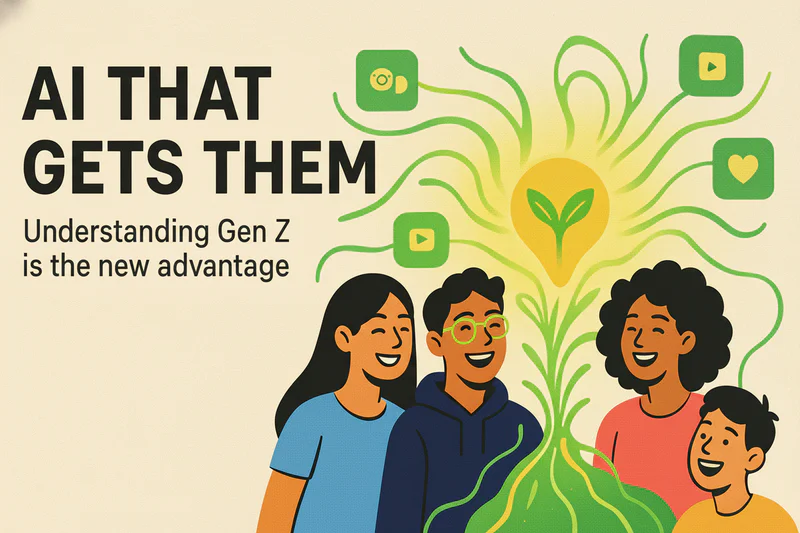
You’ve got mere seconds to grab a Gen Z consumer’s attention. Seriously, research shows their average attention span hovers around 8 seconds. Blink, and you’ve lost them. Traditional marketing tactics, emails, banner ads, broad campaigns, don’t cut it anymore. Gen Z demands relevance, speed, and authenticity. And that’s where agentic AI steps in. Unlike standard automation, agentic AI doesn’t just follow a script, it makes decisions, orchestrates actions across channels, and learns in real time to keep your brand in sync with your audience. If your goal is to connect, engage, and retain Gen Z customers, understanding why Gen Z brands need agentic AI is no longer optional, it’s essential.
Gen Z doesn’t give attention; they trade it for value.
Understanding Gen Z and the Attention Economy
Gen Z isn’t just tech-savvy, they’re attention-savvy. They’re juggling multiple apps, channels, and platforms at once, meaning brands have only a fraction of a second to make an impression. This is the reality of the attention economy: endless content competing for limited focus.
Here’s what brands need to know:
Digital-first mindset: Gen Z grew up scrolling, swiping, and clicking. They expect seamless, intuitive experiences.
Authenticity matters: They can detect generic marketing from a mile away. Personalized, transparent communication wins trust.
Instant relevance: If your content doesn’t match their context or interest, they’ll move on,fast.
Traditional marketing strategies can’t keep pace. That’s why understanding why Gen Z brands need agentic AI is critical. Agentic AI allows brands to respond instantly, personalize experiences in real time, and capture attention before it disappears, turning fleeting engagement into lasting connections.
Why Gen Z Trusts AI Brands Through Personalization and Customer Journey Orchestration
Gen Z doesn’t just tolerate AI-led experiences, they prefer them when those experiences feel hyper-personal, intuitive, and effortless. This generation grew up with algorithms recommending what to watch, what to buy, and what to listen to, so they instinctively trust brands that use AI to make every interaction smoother. But trust isn’t handed out for free. It’s earned through consistency, clarity, and genuine relevance.
Here’s what actually builds confidence:
Personalized interactions that feel “for me”
When brands tailor recommendations, content, and offers based on real behavioral signals, what they browse, pause on, replay, or abandon, Gen Z reads it as proof that the brand “gets” them. It’s not about segment-level targeting; it’s the precision of true 1:1 relevance.Customer journey orchestration that connects the dots
Gen Z moves fluidly across social, apps, email, communities, and in-product moments. AI that unifies these touchpoints, carrying context from one step to the next, creates an experience that feels smooth rather than stitched together. This coherence is what makes brands feel reliable.Transparency that respects data boundaries
Gen Z is surprisingly pragmatic about data sharing if they understand what’s collected and how it improves their experience. When brands explain how AI works behind the scenes and maintain clear consent pathways, trust grows instead of eroding.Responsiveness that mirrors Gen Z’s pace
Real-time matters. Whether it's an instant answer from a chatbot, proactive nudges based on behavior, or predictive support before a question is even asked, Gen Z perceives fast, relevant responses as a sign that a brand values their time.Consistency across every interaction
AI-driven personalization works best when the voice, tone, and promise of the brand remain aligned across channels. Gen Z is quick to notice gaps, AI that harmonizes the journey reinforces reliability.
To Gen Z, personalization isn’t a perk, it’s basic respect.
Together, personalization +customer journey orchestration become the trust engine. Agentic AI doesn’t just deliver better marketing, it creates a sense of being understood, supported, and valued. And for Gen Z, that’s the difference between a momentary interaction and a long-term relationship.

What Agentic AI Is and How It Works for Brands
Agentic AI isn’t just automation, it’s a system that makes marketing smarter, faster, and more adaptive. Unlike traditional tools that follow fixed rules, agentic AI learns, decides, and acts in real time, creating personalized experiences that resonate with Gen Z.
Here’s what makes it powerful:
Personalization at scale: AI tailors content, recommendations, and offers to individual preferences, ensuring each interaction feels relevant.
Real-time orchestration: Across channels, social, email, apps, ads, agentic AI coordinates actions seamlessly so nothing feels disjointed.
Behavioral intent signals: By analyzing actions like clicks, scrolls, and engagement patterns, AI detects what users are likely to do next and adjusts campaigns accordingly.
Adaptive decision-making: Campaigns are modified instantly based on insights, trends, and shifting behaviors.
Predictive insights: It anticipates audience needs, keeping your brand relevant and timely.
For brands targeting Gen Z, agentic AI transforms marketing from reactive to proactive, delivering experiences that feel human, thoughtful, and instant, all at scale.
How Agentic AI Boosts Brand Strategy for Gen Z
Agentic AI doesn’t just support campaigns; it reshapes how brands strategize for Gen Z engagement. Its impact is strategic, measurable, and creative. Here’s how it drives results in meaningful ways:
Dynamic content optimization: Imagine a fashion brand that sees which styles a Gen Z segment is browsing in real time and instantly surfaces relevant lookbooks or TikTok-style clips. Agentic AI enables this automatic, adaptive content delivery.
Behavior-driven micro-campaigns: Instead of broad campaigns, AI triggers highly targeted mini-campaigns based on behavioral intent signals, like a user repeatedly checking product reviews or abandoning carts. This precision drives higher conversions.
Predictive trend spotting: Agentic AI monitors emerging preferences and viral trends among Gen Z, helping brands stay ahead with campaigns that feel timely and culturally relevant.
Resource efficiency and creative freedom: With AI handling rapid testing, segmentation, and engagement scoring, marketing teams can focus on storytelling and innovation instead of manual optimizations.
Seamless multi-touch storytelling: Brands can weave experiences across platforms, email, social, in-app, ensuring each interaction builds toward a larger, cohesive narrative.
The result? Campaigns that feel personal, agile, and culturally tuned, turning fleeting Gen Z attention into meaningful brand loyalty.

Challenges and Considerations for Brands
Winning Gen Z attention with agentic AI isn’t about avoiding pitfalls, it’s about optimizing the right foundations, so the technology performs at its highest potential. Brands should focus on:
Rich behavioral intent signals: AI needs high-quality, real-time data.
Solution: Connect browsing, content, product, and ad signals into a unified intent layer for sharper decisions.Data unification & governance: Fragmented systems and unclear consent weaken personalization.
Solution: Build a central data spine with transparent opt-ins to ensure clean, trustworthy inputs.Cultural and trend relevance: Gen Z’s tastes evolve quickly.
Solution: Continuously refresh creative inputs, examples, and brand guidelines that AI models learn from.Seamless system integration: AI performs best when CRM, ads, content, and product data are connected.
Solution: Use an orchestration layer like Zigment.ai to sync actions across the entire stack.Human–AI collaboration: AI scales timing and precision, but humans bring narrative intuition.
Solution: Let AI automate execution while teams focus on message, storytelling, and strategic oversight.
With these foundations in place, agentic AI becomes a true accelerator for Gen Z engagement.

Conclusion: The New Playbook for Winning Gen Z Attention
Gen Z loyalty doesn’t come from being everywhere, it comes from showing up the right way, at the right moment.
Gen Z is rewriting the rules of the attention economy, faster decisions, sharper expectations, and zero patience for irrelevant or repetitive brand experiences. Agentic AI isn’t just a tool for this generation; it’s the infrastructure that allows brands to read intent in real time, personalize at scale, and orchestrate meaningful moments across every touchpoint.
What makes this shift so significant is how Gen Z moves: nonlinear journeys, constant channel switching, and micro-moments that scatter across social, search, messages, and apps. Traditional marketing workflows can’t keep up with that pace. Agentic AI can. It processes behavioral intent signals as they happen, aligns them with cultural trends, and delivers responses instantly, whether it's content, recommendations, support, or offers.
And when brands combine rich behavioral data, cultural relevance, seamless integration, and human creativity, they unlock a level of agility that mirrors how Gen Z actually behaves. The result? Experiences that feel intuitive rather than intrusive, personalized rather than performative, and genuinely valuable rather than noise. This is how brands not only earn attention but sustain it moment to moment, channel to channel, habit to habit.
Where Zigment Fits In
Zigment.ai is built for exactly this shift. Instead of piecing together disconnected tools, Zigment acts as an intelligent orchestration layer that sits across your stack ingesting behavioral data, interpreting intent, and triggering the next best action instantly. It adapts to fast-changing trends, maintains your brand voice, and delivers personalized experiences without manual effort. For brands trying to win Gen Z’s fragmented attention, Zigment turns agentic AI from a concept into a working system, one that learns continuously, acts autonomously, and helps your team operate at Gen Z speed.