
some brands capture customer attention.
A few convert it.
Very few turn that attention into a consistent, personalized, predictable engagement engine.
Here’s the surprising part: most companies already collect the signals they need to do this, browse activity, product interest, support queries, cart behavior, purchase patterns. But the real difference between brands that grow and brands that stall is simple: the best ones know how to turn intent into engagement. And they do it across every channel their customers touch.
If your goal is to build an omnichannel system that feels cohesive, personalized, and timely, not chaotic or stitched together, this article will show you how. You’ll learn the four foundational pillars of turning intent signals into real engagement, and how to apply them in a way that drives revenue, loyalty, and momentum.
What “From Intent to Engagement” Really Means
Businesses rarely fail because they lack intent, they fail because the gap between intent and actual engagement is bigger than it seems.
Teams plan campaigns, set targets, and build funnels, but the last-mile execution breaks: leads aren’t followed up, signals aren’t acted on, and opportunities quietly slip away. Intent exists everywhere, but engagement remains inconsistent.
“From intent to engagement” is the moment when a customer shows interest and the business responds instantly, with relevance. Human-driven workflows struggle here because responsiveness depends on availability, bandwidth, and manual triggers. Even high-performing teams can’t maintain perfect timing or personalization at scale.
Agentic AI closes this gap by detecting intent the moment it happens whether it’s a website action, product event, CRM update, or customer message and converting it into the next best action automatically. Instead of delayed or missed responses, engagement becomes continuous, timely, and consistent across every customer touchpoint.
From Reactive Messaging to Truly Personalized Omni-Channel Communication
Most businesses still operate with reactive communication, sending messages only after a trigger occurs or when a team member manually initiates outreach. This creates delays, fragmented customer experiences, and inconsistent follow-through. Customers jump between channels, email, WhatsApp, SMS, web, social and expect every interaction to feel connected, but traditional systems can’t keep up.
The shift topersonalized omni-channel communicationchanges everything. Instead of reacting, brands proactively anticipate customer needs and deliver the right message, on the right channel, at the right moment. This is powered by unified data, continuous context, and real-time responsiveness.
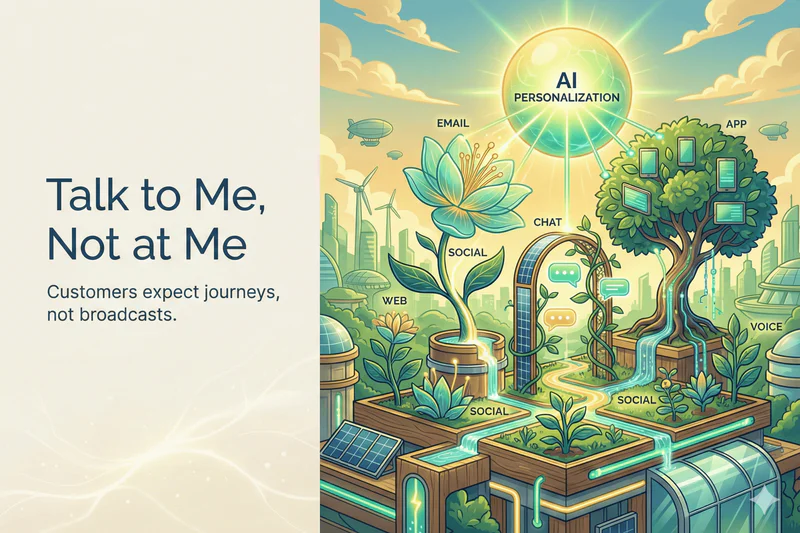
Agentic AI makes this possible by observing customer behavior across touchpoints, identifying intent signals instantly, and orchestrating seamless communication across channels including reminders, nudges, offers, and support flows. The result is a cohesive, end-to-end experience where every step feels intentional, relevant, and personalized.
Why Brands Lose Customers Between Intent and Action
Most customer journeys don’t break at the start, they break in the middle. A prospect clicks, browses, signs up, or adds an item to the cart, but the momentum fades long before a purchase or conversion happens. Not because the buyer changed their mind, but because the brand failed to guide them through the micro-steps that follow.
This “intent-action gap” is driven by familiar problems: delayed follow-ups, generic messaging, siloed data, and teams stretched too thin to react in real time. A customer might ask a question on Instagram, open an email two days later, and revisit your pricing page at midnight but without connected context, none of these signals translate into timely engagement.
The result? Missed revenue, slow pipelines, and cold leads that could’ve converted with just one well-timed nudge.
Agentic AI closes that gap by catching these signals instantly and acting on them before interest cools.
The Core Pillars of Personalized Omni-Channel Communication
Personalization isn’t about adding a first name to an email, it’s about creating a journey so fluid that customers feel genuinely understood. That level of relevance requires four pillars that turn fragmented interactions into a connected, intelligent engagement engine.
1. Unified Customer Data
When customer data lives across disconnected tools, effective personalization is impossible. A Single Customer View (SCV) consolidates every touchpoint, clicks, chats, purchases, channel preferences, into one living profile. With SCV, brands make decisions using complete context, not isolated fragments.
2. Clear Journey Mapping
Customer behavior isn’t linear. They bounce between channels, tabs, and moments. A conversational graph maps these paths dynamically, showing how customers move, where they hesitate, and which channels influence decisions. This visibility helps brands design journeys that feel coordinated rather than chaotic.
3. Real-Time Analytics
Timing defines engagement. Real-time analytics detect customer intent and sentiment as they happen, whether someone is exploring, comparing, frustrated, or ready to buy. This enables instant, meaningful responses instead of delayed, generic ones.
4. Personalized Interactions
Once intent and sentiment are clear, the system can recommend the next best action: a product suggestion, a support step, a follow-up, or a timely reminder. Interactions become more relevant, and engagement rises naturally.

How to Turn Data into Personalized Experiences
Great customer experiences don’t happen by accident, they’re engineered through smart data use, precise timing, and the ability to act across channels instantly. Turning data into personalization is less about collecting everything and more about connecting the right dots at the right moment.
1. Build a Clean, Connected Data Foundation
Start by fixing the basics: remove duplicates, sync your systems, and create consistent data structures. Clean data is what prevents awkward misfires, like sending the wrong offer or repeating the same message across channels.
2. Focus on Real Behaviors, Not Just Profiles
Static profiles tell you who the customer is. Behavioral data tells you what they’re doing right now. Track patterns like comparison loops, sudden drop-offs, or deep dives on specific features. These reveal real intent far better than age or location ever could.
3. Add Context to Make Signals Actionable
A behavior without context creates confusion. Context turns signals into insight, why they hesitated, what they’re evaluating, or whether they’re showing buying intent or support frustration. This helps responses feel intelligent rather than automated.
4. Use an Omnichannel Orchestration Layer
This is where personalization becomes execution. An omnichannel orchestration layer coordinates timing, channel selection, and message sequencing so every interaction feels consistent, even if the customer jumps between email, WhatsApp, web, or app within minutes.
5. Automate Decisions to Deliver at Scale
Once signals and context are clear, automation ensures fast, reliable responses every time. The result? Personalization that feels natural, timely, and impossible to miss.

Real-World Applications: Intent to Engagement in Action
Consider this scenario: a customer browses a product multiple times but hasn’t made a purchase. Instead of waiting for a standard follow-up email, the system detects the behavior and triggers a personalized, omnichannel interaction. For example, the customer might first see a timely in-app suggestion highlighting the product, then receive a contextual push notification, followed by a tailored email or SMS, all aligned in tone, timing, and content. Each touchpoint reinforces the message without feeling repetitive, ensuring the experience is seamless and connected.
This coordinated approach makes the moment feel relevant, helpful, and timely, dramatically increasing the likelihood of engagement and conversion across channels.The beauty of this approach is its flexibility. Whether you’re in retail, fintech, SaaS, D2C, or any other sector, the principles remain the same: detect intent, interpret context, deliver personalized experiences, and coordinate across channels. By building a system that responds intelligently to signals, any business can transform customer intent into meaningful engagement and measurable outcomes.
Common Challenges and How to Overcome Them
Data Silos: When customer information is scattered, signals are missed, and personalization falters.
Solution: Consolidate all data into a Single Customer View (SCV) so every team and channel works from the same, complete profile.Delayed Responses: Manual workflows slow follow-ups, letting intent fade.
Solution: Implement real-time analytics and automated triggers to act instantly on customer behaviors.Inconsistent Messaging: Different channels or teams send conflicting messages, confusing customers.
Solution: Use an omnichannel orchestration layerto coordinate timing, channel, and content across every touchpoint.Scaling Personalization: Maintaining relevance across a growing audience is difficult.
Solution: Apply AI-driven next-best-action logic to automate contextually relevant recommendations at scale.
With these solutions in place, brands can deliver timely, cohesive, and personalized engagement consistently.
Turning Intent Into Consistent Engagement
Bridging the gap between customer intent and meaningful engagement is no longer optional, it’s essential. By unifying customer data, mapping journeys, analyzing intent and sentiment in real time, and orchestrating personalized interactions across channels, businesses can transform sporadic touchpoints into seamless, high-impact experiences.
Platforms like Zigment make this achievable by combining real-time analytics, omnichannel orchestration, and AI-driven next-best-action logic into a single system. With Zigment, brands can detect intent, act instantly, and maintain consistent personalization at scale, across email, SMS, app, web, and more. The result? Engagement that feels intelligent, timely, and human. Whatever your industry, these principles empower you to turn intent into measurable business growth.