
"Everyone has a plan until they get punched in the face."
Mike Tyson wasn’t talking about business process management, but he might as well have been. In the corporate world, that "punch" is the unexpected customer behavior that breaks your perfectly designed flowchart. You designed a sequence for Scenario A, but the customer chose Scenario C.
The result? The workflow breaks. The lead goes cold. The support ticket sits in limbo.
For decades, the meaning of "workflow" has been synonymous with rigidity, a static set of train tracks designed to move a task from Point A to Point B. But if you are still defining workflows as simple, linear sequences, you aren't just outdated; you’re losing revenue to competitors who have embraced intelligence over obedience.
It’s time to retire the conveyor belt. Let’s talk about orchestration.
The Textbook Definition (And Why It’s Insufficient)
If you Google what is a workflow, you’ll get a standard, vanilla definition: A workflow is a sequence of processes through which a piece of work passes from initiation to completion.
At its most basic level, this is true. Every workflow has three core components:
The Trigger: The event that starts the chain (e.g., a form fill or a new email).
The Transformation: The rules or tasks applied to the data.
The Output: The final result (e.g., an invoice paid or a lead qualified).
This definition works perfectly for manufacturing widgets. It fails miserably for managing human relationships. Humans are messy! We change our minds, we ask complicated questions, and we switch channels from email to WhatsApp in the blink of an eye.
A static definition of workflow ignores the most critical variable in modern business: Context.
Workflow vs Process vs Orchestration
Before we dive into the AI revolution, we need to clear up the semantic mess that plagues this industry. These terms are often used interchangeably, but they are distinct layers of your operation.
Think of a symphony orchestra.
The Process (The Symphony): This is the macro level business goal. "Onboard a new client" or "Renew a subscription." It’s the broad outcome you want to achieve.
The Workflow (The Sheet Music): These are the specific, tactical steps. "Send email on Day 1," "Create task in CRM on Day 3." It tells the instruments what to play and when.
The Orchestration (The Conductor): This is the missing link in most businesses. Orchestration doesn't just follow the sheet music; it listens to the room. If the audience (the customer) gets bored, the conductor speeds up the tempo. If a musician (a software tool) misses a beat, the conductor adjusts.
Most companies have processes and workflows. Very few have orchestration.
The Three "Legacy" Workflow Models
To understand where we are going, we have to look at what is currently powering 90% of business operations. These models aren't "bad," but they are limited.
1. Sequential Workflows
This is a straight line. Step A must finish before Step B starts. It’s great for approvals, but terrible for marketing. If a customer ignores Step A (the email), Step B never happens, or worse, it happens without context.
2. State Machine Workflows
This model moves items between "states" like Pending, Approved, or Rejected. It’s slightly more flexible but still relies on rigid definitions of what constitutes a state change.
3. Rules Driven Workflows
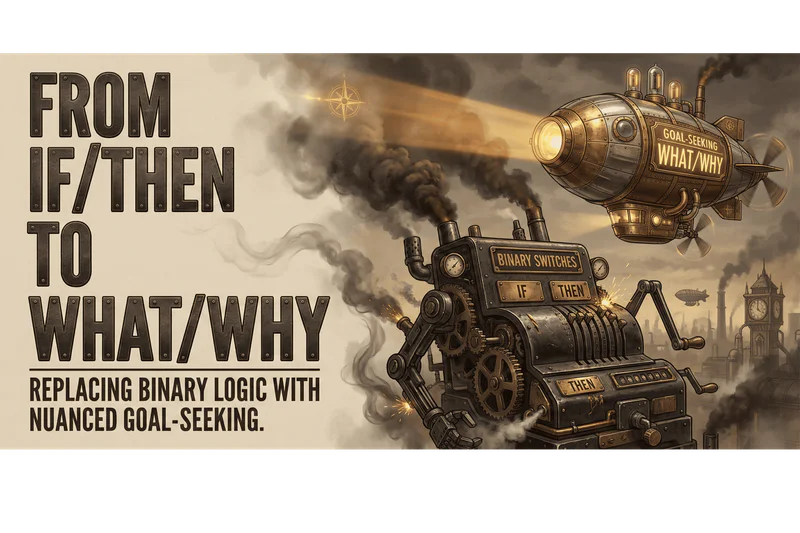
The classic "If This, Then That" (IFTTT). If user clicks link, send SMS. The problem? It’s binary. It doesn't account for nuance. If a user clicks the link but then replies "I'm not interested anymore," a rules driven workflow will blindly send the SMS anyway, annoying the customer and hurting your brand.
The Shift to Agentic AI: Workflows with a Brain
Here is where the meaning of "workflow" changes fundamentally.
We are moving from "Static Automation" to "Agentic Orchestration." In an Agentic Workflow, the system isn't just following a map; it's reading the terrain.
Zigment’s approach to this what we call the Agentic AI layer replaces rigid rules with goals. Instead of telling the software "Send Email #3," you tell the AI Agent: "Nurture this lead until they are ready to book a demo."
How is this different?
Dynamic Triggers: The trigger isn't just a click; it’s an Intent. Using Conversation Analysis, the workflow detects if a customer is "Urgent," "Curious," or "Frustrated," and adapts the path instantly.
Non Linear Paths: The AI decides the next best step in real time. If a customer asks a question on Instagram, the workflow doesn't force them back to email. It answers them there, updates the CRM, and skips the generic nurture sequence.
Memory & Context: Unlike a standard workflow that "forgets" interactions once the step is complete, an Agentic workflow accesses a Conversation Graph a unified memory bank of every interaction. It knows context.
Real World Example: The Gym Membership Renewal
Let’s look at a practical example from the fitness industry to see the difference between a standard workflow and an intelligent one.
The Old Way (Static Workflow)
Trigger: Membership is 30 days from expiry.
Action: Send automated "Renew Now" email.
Result: Customer ignores it.
Follow up: Send "Last Chance" SMS.
Outcome: Customer is annoyed because they haven't visited the gym in three months and feel guilty. They churn.
The New Way (Agentic Orchestration)
Trigger: AI detects "Low Attendance" + "Upcoming Expiry."
Analysis: The system checks the Data Layer and sees the member preferred yoga classes but hasn't booked one in 60 days.
Action: The AI Agent initiates a WhatsApp conversation: "Hey Sarah, we missed you at the Tuesday Yoga flow! Everything okay? We have a spot open this week if you want to jump back in."
Reaction: Sarah replies, "I've been injured."
Adaptation: The workflow immediately stops the "Renew Now" sales pitch. Instead, the Agent replies with empathy and offers a "Membership Freeze" option.
Outcome: Trust is built. Sarah doesn't churn; she pauses and returns later.
The Silent Killer: Data Silos
You cannot build an intelligent workflow on dumb data.
The biggest barrier to adopting this modern workflow strategy is data silos. If your email tool doesn't talk to your SMS tool, and neither of them talks to your booking system, your workflow is flying blind.
"A workflow is only as intelligent as the data it can access. If it can't see the full customer journey, it’s just guessing."
To truly redefine what a workflow means for your business, you must first solve the data problem. This requires a Unified Customer Profile a single source of truth that the AI can query before it makes a decision. When you eliminate the silos, you stop automating tasks and start orchestrating experiences.
Summary: Are You Building Tracks or Training Conductors?
The definition of a workflow has evolved. It is no longer just about efficiency; it is about adaptability.
Old Definition: A sequence of steps to complete a task.
New Definition: A dynamic system that interprets data to achieve a business outcome.
As you look at your own content strategy and operations for 2026, ask yourself: Are you building more train tracks that break whenever a customer steps off the path? or are you ready to implement an Agentic layer that can conduct the symphony, no matter what happens?
The future belongs to the conductors.