
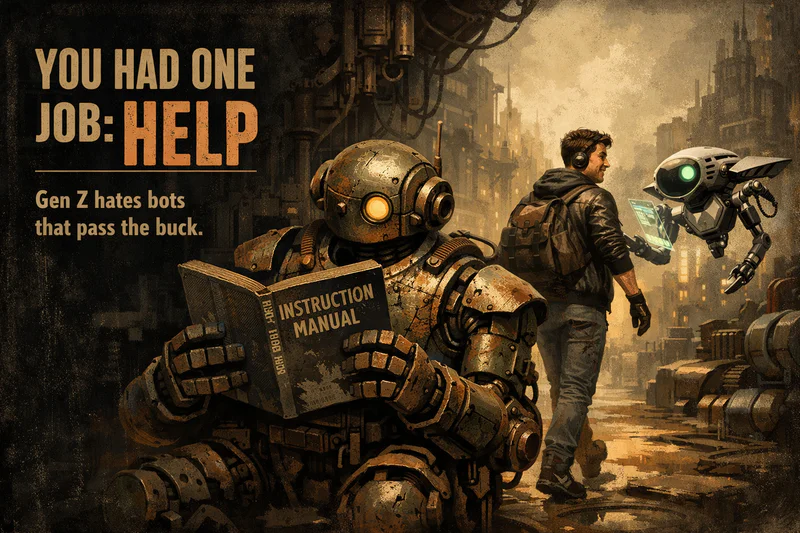
A Gen Z shopper once summed it up perfectly: “If your chatbot wastes my time, I’m gone.”
Short. Direct. Brutally honest. And it captures exactly what Gen Z wants from AI-powered customer experiences: speed, clarity, and zero nonsense.
This generation grew up troubleshooting their own tech, switching apps in seconds, and expecting everything to work the first time. When a brand interaction feels slow, scripted, or clueless, they bounce fast. But when AI gets it right? They’ll rave about the experience, return to the brand, and even recommend it.
In this article, we’ll break down the experience behaviors Gen Z rewards, the AI habits that frustrate them instantly, and what we as brands building for 2026 can do to deliver interactions that actually match their expectations. Let’s get into it!
Why Gen Z Is Reshaping AI-Driven Customer Experience in 2026
Gen Z doesn’t reward automation, they reward intelligence. The second an AI shows it understands their intent; the experience becomes unforgettable.
Gen Z isn’t just another audience segment. They’re the group pushing every brand to rethink how digital experiences should work across the entire journey. They expect real-time answers, context-aware conversations, and AI that actually helps instead of tossing links to generic help articles. And because they interact with technology more than any previous generation, they instantly recognize when a system feels outdated or unhelpful.
Their expectations are shaping AI-driven CX and marketing trends in 2026 in three big ways:
Speed is the baseline. If it isn’t instant, it feels broken.
Personal relevance matters. They expect AI to understand their journey, not restart from scratch.
Authenticity wins. Short, human-like clarity beats corporate scripts every time.
Gen Z is reshaping digital experience by demanding what should’ve been standard all along: intelligent, journey-aware, omnichannel interactions that actually move things forward.
What Gen Z Actually Wants From AI-Powered Customer Experience
Gen Z doesn’t want automated interactions. They want experiences that act. This is exactly where agentic AI shines: AI that understands intent, reads behavior signals across channels, and takes autonomous steps to improve the journey instead of repeating scripted lines. For brands building with Zigment.ai, that’s the advantage: experiences that think, decide, and execute.
1. Instant Answers Backed by Intelligent Action
Gen Z’s real-time expectations aren’t just about speed. They’re about momentum across the entire journey. They want AI that replies instantly and takes action instantly, initiating returns, updating accounts, solving payment issues. Agentic AI collapses multi-step workflows into one seamless experience, improving both speed and customer experience.
2. Context From Intent + Behavior, Not Keywords
Traditional chatbots wait for exact phrases. Agentic AI doesn’t. It reads behavior signals such as hesitation, repeat clicks, navigation loops, error triggers, and sentiment so it understands why someone is reaching out.
This enables real journey orchestration.
Example: If a user keeps toggling between “My Orders” and “Help,” models infer delivery anxiety and proactively offer tracking or replacement options.
3. Emotional Intelligence That Matches the Moment
Gen Z expects AI that responds with tone, not templates. Agentic AI adjusts language based on emotional cues such as urgency, frustration, and confusion so the interaction feels like help, not a help desk.
4. Transparency Without the Corporate Mask
Gen Z likes AI. They don’t like AI pretending to be human. Clear transparency such as “I’m your AI assistant, I can take care of this for you” builds trust and strengthens overall experience.
This is the experience style Gen Z rewards: fast, intelligent, emotionally aware, and journey-aware, everything static chatbots fail to deliver and everything agentic AI naturally excels at.

What Annoys Gen Z the Most: The Worst AI Experience Moments They Complain About
Gen Z’s frustration with brand interactions usually comes down to one thing: bots that behave like flowcharts instead of helpers. Traditional automation still relies on rigid conversation graphs, fixed paths, predefined responses, and almost no awareness of where the user is in their customer journey. That’s why Gen Z calls them out so quickly. They feel mechanical, repetitive, and disconnected from real intent.
1. Getting Stuck in Loops With No Path Out
Static conversation graphs repeat the same options because they only understand keywords, not behavior. When a user switches direction, the bot can’t follow. Agentic AI fixes this by reading signals such as navigation patterns, sentiment, and stalled steps and adapting in real time.
2. Bots That Block Human Escalation Instead of a Timely Handoff
Gen Z expects smooth escalation when needed. Traditional bots delay the timely handoff users rely on. Agentic AI does the opposite. It detects frustration or urgency and instantly routes users to a human without disrupting the omnichannel journey.
3. Robotic, Overly Formal Responses
Templates sound cold. Gen Z wants clarity and warmth. Agentic AI adapts tone dynamically instead of sticking to canned scripts.
4. Bots That Instruct Instead of Acting
“Please read our FAQ” is not an experience. Agentic systems execute actions such as refunds, resets, and replacements so users aren’t left doing the work.
When brands replace rigid conversation graphs with agentic AI, these frustrations disappear and the increase in satisfaction is immediate.

The Shift From Automation to Agentic AI: Solving Gen Z’s Biggest Experience Complaints
Most brands still rely on traditional automation built on rigid conversation graphs and static response trees. These systems crack the moment a user deviates from the expected path. Gen Z expects interactions that understand context, adapt instantly, and move the journey forward. That’s exactly where agentic AI transforms the experience.
1. It Understands Intent, Not Just Inputs
Instead of waiting for keywords, agentic AI uses behavior signals such as hesitation, drop-offs, and navigation loops to interpret real intent. With a unified Single Customer View (SCV), it understands the customer's history, active issues, and preferences across channels, enabling true omnichannel continuity.
2. It Takes Autonomous Action
Agentic AI doesn’t stop at recommendations. It completes tasks. Refunds, resets, replacements, and workflow updates happen automatically because the AI uses the SCV to understand context and knows what needs to be done. Gen Z notices when AI removes friction from the customer journey.
3. It Adapts the Conversation Beyond Static Graphs
Conversation graphs lock users into fixed flows. Agentic AI constantly rewrites the path based on emotion, behavior, and evolving intent, delivering dynamic journey orchestration that feels fluid and natural.
4. It Enables Smart, Timely Handoffs
Instead of blocking escalation, agentic AI detects frustration or stalled resolution and triggers a timely handoff to a human. The transition feels respectful, not like a last resort, and fits neatly into the user’s ongoing omnichannel experience.
With agentic AI, brands finally move beyond automation toward experiences that feel intuitive, proactive, and genuinely helpful, exactly the kind of CX Gen Z expects and rewards.
What Brands Should Do Next: A Playbook for Gen Z-Friendly AI Driven CX and Marketing
Gen Z has made it clear. They won’t tolerate clunky, rigid, or slow interactions. Brands that want to win this audience need a structured plan to modernize AI-powered experience and marketing journeys. Here’s a practical playbook.
1. Map the Complete Customer Journey Using Conversation Graphs
Identify all touchpoints such as app, website, social, email, and voice channels.
Use journey orchestration to ensure every interaction is seamless and context-aware.
2. Build Context-Aware AI With SCV
Integrate all user data into a Single Customer View.
Ensure the AI understands intent and behavior signals across channels to deliver relevant, proactive experiences.
3. Design Action-Oriented Conversations
Replace static conversation graphs with agentic AI that executes tasks automatically.
Focus on workflows that reduce friction such as refunds, replacements, account updates, and other high-impact actions.
4. Add Emotional Intelligence
Train AI to detect urgency, confusion, and frustration.
Adapt tone dynamically to make responses feel human, empathetic, and efficient.
5. Enable Smart, Timely Handoffs
Let agentic AI identify when human intervention is needed.
Ensure escalations are smooth and don’t disrupt the omnichannel journey.
Following this playbook, brands can deliver AI-driven experiences that feel intelligent, proactive, and frictionless, giving Gen Z exactly what they expect and leaving competitors behind.
Delivering AI Experiences That Gen Z Actually Values
Gen Z has raised the bar for brand interactions. They expect speed, intelligence, emotional awareness, and seamless omnichannel experiences across their entire journey. Traditional automation, rigid conversation graphs, and static workflows no longer cut it.
Agentic AI, powered by intent recognition and behavior analysis, delivers the dynamic, action-oriented experiences this generation demands. It adapts conversations in real time, executes tasks autonomously, and provides smart, timely handoffs when human intervention is needed.
For brands looking to meet these expectations, tools like Zigment show the way. By combining agentic AI with advanced journey orchestration, companies can create frictionless experiences that delight Gen Z, improve loyalty, and strengthen overall CX and marketing outcomes.
The path forward is clear. Understand intent, act proactively, orchestrate seamlessly across channels, and never underestimate Gen Z’s demand for experiences that just work. Brands that master this will not only retain this audience but turn them into vocal advocates for the future of AI-powered customer experience.