
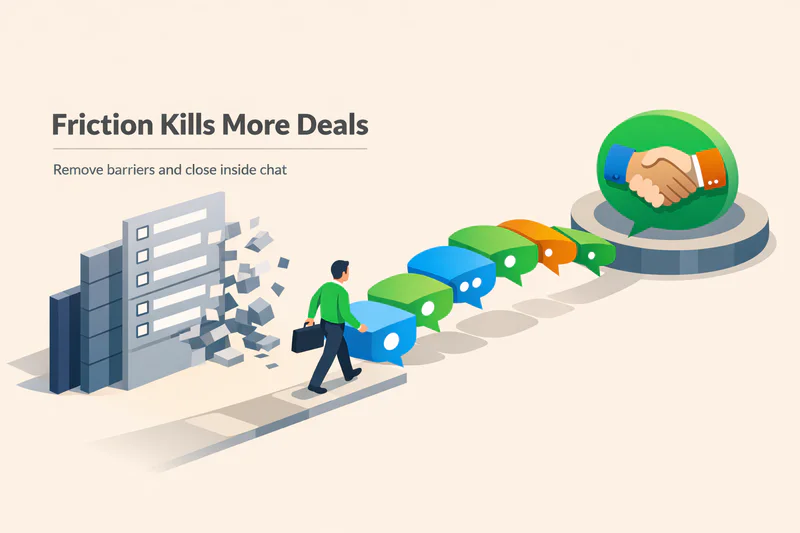
Conversational commerce in B2B is changing how deals actually get done and buyers are quietly voting for chat over forms. Recent industry surveys suggest over 70% of B2B buyers expect real-time responses during evaluation. That expectation shapes revenue. We’ve all seen it: a high-intent prospect lands on your site, has one urgent question, and disappears when the process slows down. Deals don’t die from lack of interest. They stall from friction. In this playbook, we’ll break down exactly how to move from passive b2b lead generation to active b2b sales conversations that guide buyers forward, step by step, inside chat, where decisions already happen!
What Is Conversational Commerce in B2B (And Why Deals Are Moving to Chat)
Conversational commerce in B2Bmeans guiding prospects from curiosity to commitment through real-time conversations, on your website, messaging apps, or embedded chat experiences. Instead of pushing buyers into static funnels, we meet them where questions naturally arise and help them move forward in the moment. It’s simple. A buyer asks. You respond. Momentum builds.
From Support Chat to Revenue Conversations
Traditional chat handled tickets and basic queries.
Modern chat drives b2b sales by answering pricing, use-case, and implementation questions instantly.
Conversations capture context, industry, urgency, budget, without forcing long forms.
Why Buyers Prefer Conversations
Faster answers reduce hesitation during evaluation.
Personalized responses increase trust and clarity.
Decisions move forward while interest is still high.
How It Powers B2B Lead Generation
Conversations uncover real intent through questions and responses.
Leads become qualified during interaction, not after follow-ups.
Sales teams receive richer insights before stepping in.
Why Traditional B2B Sales Funnels Are Losing Momentum
The classic funnel looks clean on slides. In reality, buyers zigzag through research, pricing checks, internal approvals, and quick questions that rarely fit neatly into forms. When processes feel slow or disconnected, conversations and deals fade out.
Form Fatigue Is Real
Buyers hesitate when faced with long data requests before they get answers.
High-intent prospects leave when a simple question requires a full sign-up.
Static forms rarely capture urgency or buying stage.
Slow Follow-Ups Drain Momentum
Waiting hours or days for responses interrupts decision flow.
Sales teams often reach out after interest cools.
Real-time conversations keep energy high and move deals forward.
Disconnected Conversations Confuse Buyers
Email threads scatter information across channels.
Sales, marketing, and support often lack shared context.
Buyers repeat the same details, increasing friction.
Conversational selling solves these issues by keeping interactions continuous, contextual, and aligned with how buyers actually decide.
The Conversational Selling Mindset: From Lead Capture to Deal Conversations
Shifting to conversational selling starts with a mindset change. Instead of collecting contacts and chasing responses later, we guide prospects through real-time discussions that reveal intent, answer questions, and move deals forward naturally. The focus moves from volume-driven b2b lead generation to meaningful b2b sales conversations.
Conversations Over Campaigns
Continuous dialogue replaces one-time form submissions.
Prospects engage at their own pace asking, clarifying, progressing.
Sales teams respond based on real context, not assumptions.
Qualification Happens Naturally
Smart questions uncover needs, budget, and timelines.
Buyers share details during interaction rather than filling static forms.
Leads arrive to sales teams already enriched with insights.
Sales, Marketing, and Support Move Together
Shared conversation history prevents repeated questions.
Teams collaborate in one flow instead of isolated tools.
Buyers experience a smooth, human journey from first message to deal discussion.
The Conversational Commerce in B2B Playbook: How to Close Deals in Chat
This is where strategy turns into action. When we implement conversational commerce in B2B effectively, conversations stop being passive interactions and start becoming structured deal pathways. Every message moves the buyer one step closer to a decision.
Step 1: Capture Intent Where Conversations Start
Buyers don’t wait for funnels. They message when curiosity peaks.
Website chat for high-intent visitors.
Messaging apps for quick follow-ups after webinars or demos.
Social channels where prospects naturally ask questions.
The goal is simple: remove barriers between interest and response.
Step 2: Qualify Through Smart Questions
Instead of long forms, ask focused questions during conversations.
“What problem are you trying to solve right now?”
“How soon are you looking to implement?”
“Which team will use this most?”
Answers reveal urgency, fit, and readiness without interrupting momentum. This turns early interactions into meaningful b2b lead generation moments.
Step 3: Guide Buyers Through Micro-Decisions
Deals rarely close in one leap. They move through small confirmations.
Share pricing tiers directly in chat.
Offer quick comparison tables or FAQs.
Send short demo clips when buyers hesitate.
Each response builds confidence and reduces friction during b2b sales discussions.
Step 4: Bring Sales Reps in at the Right Moment
Automation handles early questions. Humans step in when nuance matters.
Escalate when budget or technical questions arise.
Provide reps with full conversation history.
Focus human time on decision-ready prospects.
Step 5: Close or Book Next Steps Instantly
Momentum peaks during active conversations.
Embed calendar links for immediate scheduling.
Share proposals directly inside chat threads.
Confirm next actions before the conversation ends.
Deals move faster when conversations stay active, contextual, and purposeful.
Real-World Use Cases: Where Conversational Commerce Wins in B2B
Once teams embrace conversation-driven workflows, practical use cases appear everywhere. We start noticing moments where buyers want answers immediately and deals move forward when conversations happen right then.
High-Intent Website Visitors
Prospects exploring pricing or feature pages often have urgent questions.
Real-time chat converts curiosity into active b2b sales discussions.
Demo and Pricing Requests
Buyers comparing vendors want clarity quickly.
Conversations help qualify needs while guiding next steps.
Post-Event and Webinar Follow-Ups
Attendees already show interest.
Chat keeps engagement alive instead of sending generic follow-up emails.
Account-Based Outreach
Personalized conversations build stronger relationships with target accounts.
Returning Prospects
Familiar visitors often come back with buying intent.
Conversational selling helps reconnect context instantly.
Common Mistakes Companies Make with Conversational Commerce
Even strong teams stumble when adopting conversation-driven workflows. We’ve seen patterns that slow progress and frustrate buyers.
Treating chat like support only: Sales opportunities get missed when conversations stop at basic answers.
Over-automating interactions: Buyers sense scripted replies and disengage quickly.
No clear sales ownership: Without accountability, valuable conversations sit idle.
Lack of shared context: Teams ask repeated questions, breaking momentum.
Strong conversational selling requires balance, automation for speed, humans for trust, and shared insights for seamless b2b sales progress.
The Future of B2B Sales Is Conversational And Where Zigment Fits In
Buyers already expect conversations that move as fast as their decisions. Teams that adapt will shorten sales cycles, improve b2b lead generation, and create smoother deal journeys through real-time interactions. Platforms like Zigment help unify conversations across channels, giving sales teams full context and automation without losing the human touch. Instead of chasing cold leads, you guide active buyers through meaningful discussions. The future of b2b sales isn’t about pushing prospects through rigid funnels, it’s about meeting them in chat and helping them move forward, one conversation at a time!